
Frequently Asked Questions
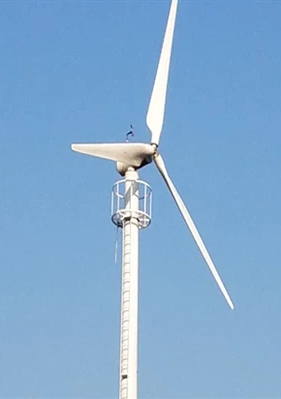
What is the advantage of electric yawing control wind turbine?
Electric yaw wind turbine is a device that makes the wind wheel face the main wind direction, which can improve the efficiency and safety of wind power generation units. The advantages of electric yaw wind turbine are as follows:
- It can accurately track the wind direction, effectively use wind energy and avoid power loss caused by wind direction changes.
- It can realize precise control of the wind wheel through components such as yaw bearing, yaw drive device, yaw brake, etc., and ensure the stable operation of the wind wheel under various working conditions.
- It can prevent the twisting and damage of the cable caused by long-term operation through components such as yaw counter, cable protection device, etc..
- It can realize fast and smooth rotation of the wind wheel through components such as yaw hydraulic circuit, etc. and reduce the impact of vibration and noise generated during the rotation process on the life of the wind wheel.
- It can realize coordinated control of multiple wind turbines in the wind field through optimization algorithms, so that each wind turbine can achieve the best power generation effect
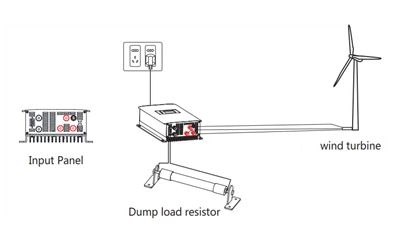
Can multiple AC wind turbines be connected to a single grid-tied inverter?
Theoretically, multiple AC wind turbines can be connected to a single grid-tied inverter, but in practical applications, this approach faces several challenges:
- Synchronization Issues: The output frequency and phase of AC wind turbines may vary due to environmental changes (e.g., wind speed). Direct connection to the same grid-tied inverter may result in inconsistencies leading to energy loss or equipment failure. Additional synchronization equipment is required to solve these issues, which increases system complexity and cost.
- Control Difficulty: A single grid-tied inverter needs to manage output parameters (e.g., voltage, frequency) of multiple turbines simultaneously. This significantly increases the control difficulty and may compromise grid stability and efficiency.
- Power Generation Efficiency: Each wind turbine has its own optimal operating point (e.g., maximum power curve point). Sharing one inverter makes it difficult to ensure all turbines operate at their optimal points, which reduces overall power generation efficiency.
- Reliability Issues: When one inverter handles multiple turbines, any fault in the inverter would disrupt the grid connection for all connected wind turbines, affecting system reliability.
Therefore, although technically feasible, considering factors such as cost-efficiency, operational performance, and system reliability, wind turbines are typically equipped with independent grid-tied inverters.
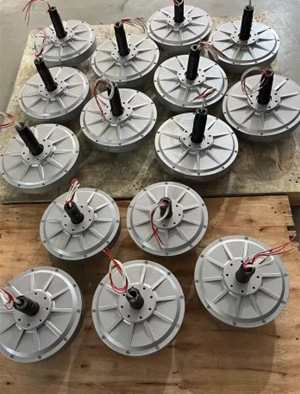
Why Axial flux generators tend to be more expensive than radial flux generators?
Axial flux generators tend to be more expensive than radial flux generators for several reasons:
- Complex Manufacturing Process: Axial flux generators have a more complex design and manufacturing process. The precise alignment required for the axial flux path and the need to maintain a small air gap can be challenging and costly
- Material Costs: These generators often use high-quality materials, such as rare earth magnets and grain-oriented steel, to achieve higher efficiency and power density. These materials are more expensive than those typically used in radial flux generators
- Efficiency and Performance: Axial flux generators offer higher efficiency and power density due to their shorter and more direct magnetic flux path. This performance advantage comes at a higher cost
- Cooling and Thermal Management: The design of axial flux generators allows for better cooling and thermal management, which can involve additional costs for advanced cooling systems
Overall, while axial flux generators provide significant performance benefits, these advantages come with higher manufacturing and material costs, making them more expensive than radial flux generators.
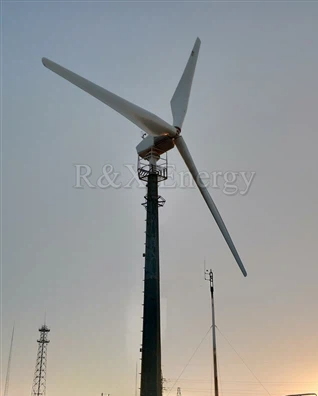
What is the different between traditional horizontal wind turbine and electrci yawing control wind turbine?
Wind Turbine with a Tail (Traditional type):
- Uses a tail vane to naturally align with the wind.
- Common in small wind turbines.
- The tail helps the rotor automatically turn towards the wind direction.
- Simpler design, lower cost and minimal maintenance.
- Wind Turbine without a Tail (Electric Yaw Control).
- Uses electric motors to rotate the nacelle.
- Found in large commercial wind turbines.
- Relies on sensors (such as wind direction sensors) to detect the optimal orientation.
- More precise and efficient but requires additional power consumption.
In summary, wind turbines with tails use natural aerodynamics to turn, while tail-less turbines use active mechanical control for greater precision. If you’re dealing with small-scale turbines, a tail might be enough. But for large-scale power generation, electric yawing is necessary.
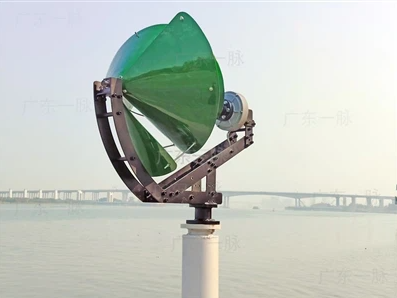
What is the advantage of Archimedes type wind turbine?
The Archimedes wind turbine, also known as the Liam F1, offers several advantages, especially for urban environments:
- Efficiency: It can capture up to 80% of the wind’s energy, which is comparable to the best-performing traditional wind turbines
- Multi-directional: Unlike conventional turbines, it can efficiently capture wind from various directions, making it ideal for areas where wind direction frequently changes
- Low Noise: Its unique design ensures quiet operation, significantly reducing noise pollution
- Compact and Lightweight: This makes it suitable for residential installations, including rooftops
- Low Maintenance: The design requires minimal upkeep, which is cost-effective in the long run
- Bird-Friendly: Its structure is less likely to harm birds compared to traditional wind turbines
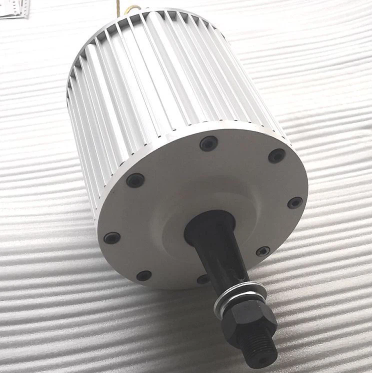
What is the different between radial flux permanent magnet generator and axial flux permanent
- The difference between radial flux generator and axial flux generator is mainly in the direction of the magnetic flux and the shape of the machines.
- In a radial flux generator, the magnetic flux flows radially from the rotor to the stator, while in an axial flux generator, the magnetic flux flows axially or parallel to the rotation
- Radial flux generators have a cylindrical shape, while axial flux generators have a flat or disc shape.
- This affects the length of the flux path, the winding configuration, the cooling system, and the material cost of the machines.
- Radial flux generator is mostly used in horizontal wind turbine.
- Axial flux generator is mostly used in vertical wind turbine.
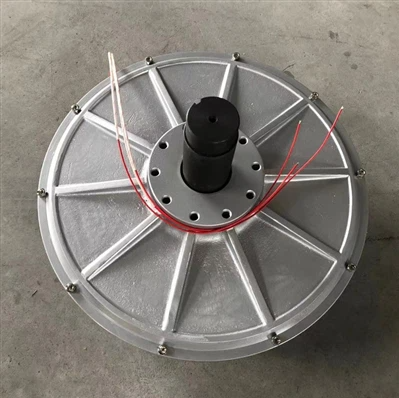
What is the difference between iron-core and coreless permanent magnet generators?
The main difference between iron-core and coreless permanent magnet generators lies in their construction and performance characteristics:
Iron-Core Permanent Magnet Generator:
- Construction: These generators have coils wound around iron cores. The iron cores help to concentrate the magnetic flux, which increases the efficiency of the generator.
- Performance: The presence of iron cores enhances the magnetic field, leading to higher power output and efficiency. However, they can also cause eddy current losses and hysteresis losses, which can reduce overall efficiency.
- Applications: Iron-core generators are commonly used in applications where high power output and efficiency are required, such as in large-scale power generation.
Coreless Permanent Magnet Generator:
- Construction: These generators do not have iron cores. Instead, the coils are wound in an air-core configuration, which eliminates the use of iron.
- Performance: Coreless generators have lower eddy current and hysteresis losses, resulting in higher efficiency at lower speeds. They are also lighter and have less cogging torque, which makes them suitable for applications requiring smooth and efficient operation.
- Applications: Coreless generators are often used in small-scale and low-speed applications, such as in wind turbines and portable power generation systems.
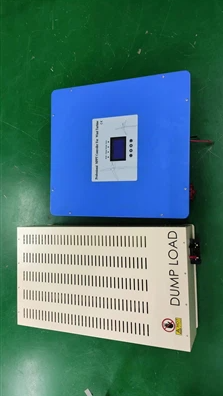
What is advantage of MPPT charge controller?
- An MPPT charge controller is a device that optimizes the power output of a Wind turbine by adjusting the voltage and current to match the maximum power point (MPP) of it.
- MPP is the point on the power-voltage curve of a wind turbine where the product of voltage and current is the highest. By tracking the MPP, the MPPT charge controller can increase the energy harvest from the wind turbine by up to 30% compared to a conventional PWM charge
- An MPPT charge controller works by using a AC to DC converter to step down the voltage from the wind turbine to the battery level, while increasing the current proportionally. This way, the power from the wind turbine is conserved and the battery is charged more efficiently.
- An MPPT charge controller can also handle different types of batteries, such as lead-acid, lithium-ion, or nickel-metal hydride, and provide various protection features, such as overcharge, overdischarge, short circuit, and reverse polarity
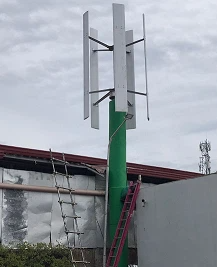
What is advantage of H shape vertical wind turbine?
Higher Efficiency: H-type turbines have a higher efficiency compared to traditional wind turbines because of their unique blade design. Their blades are longer and curved, which enables them to capture more wind energy.
Better Performance in Low Wind Speeds: H-type turbines have better performance in low wind speeds compared to traditional turbines, which means they can generate electricity even in wind speeds as low as 3 meters per second.
Reduced Noise Pollution: The unique blade design of H-type turbines reduces the amount of noise they produce, making them more suitable for residential areas.
Lower Maintenance Costs: H-type turbines have fewer moving parts compared to traditional turbines, which means they require less maintenance and have a longer lifespan.
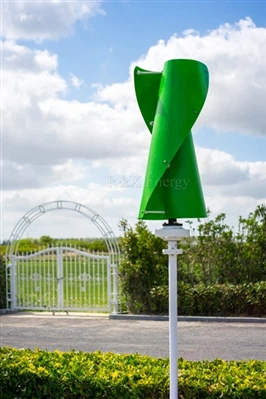
What's the advantage of Helic Vertical wind turbine?
A helical wind turbine is a type of vertical axis wind turbine (VAWT) that has a helical shape and can capture wind from any direction. Some of the advantages of helical wind turbines are:
- They have a low noise level, because the blades do not reach high speeds and do not create sonic
- They have a rugged design and minimum maintenance, because they do not need complex mechanisms to adjust the orientation of the blades or the generator.
- They have a good performance in complex winds, such as turbulent, gusty, or changing winds, because they can adapt to any wind direction and speed.
- They have a safe operation in the urban environment and an esthetic appearance, because they are smaller, lighter, and less intrusive than horizontal axis wind turbines (HAWT).
- They have a low production cost, because they can use simple materials and methods to construct the blades and the generator.